


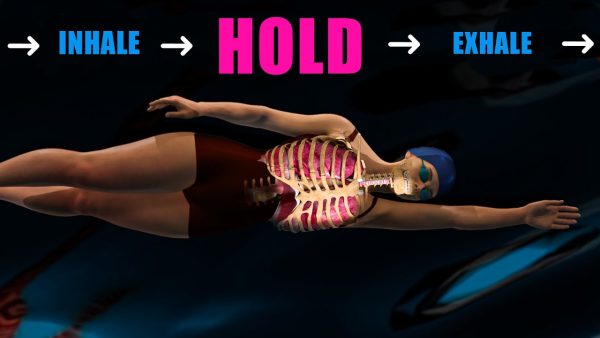
I tried swimming with two breathing techniques, and the differences were huge. With one technique, I felt heavy and desperate, with the other one, I felt light and calm.
Breathing correctly is the main obstacle to unlocking a smooth swim. From the outside, swimming looks simple, a beginner looks at a swimmer and thinks, “I can move my arms and legs like that.”
When the beginner enters the water and tries to swim, he discovers two things; when trying to raise the legs, the breathing becomes more uncomfortable, and the level of discomfort increases.
Instead of finding a better way to breathe, the beginner focuses more on the legs and arms. This is a big mistake.
Breathing is something we don’t usually think about. We mistakenly believe that it is an automatic bodily function that should not be messed around with.
The Importance of CO2
Aaron said that he hated swimming until he figured out the correct breathing technique.
What we usually learn in school is that we inhale oxygen and exhale carbon dioxide (CO2). This explanation is too simple if you want to understand how to swim smoothly, with this simple explanation we assume that CO2 is just a waste product and is bad.
While too much carbon dioxide is bad, too little is also bad for you. But why am I telling you all this? Because when you are swimming you will need to maintain a healthy amount of oxygen and carbon dioxide in your body.
It sounds strange but CO2 is a catalyst for delivering oxygen to your muscles and brain.
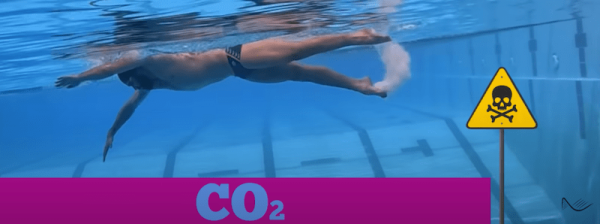
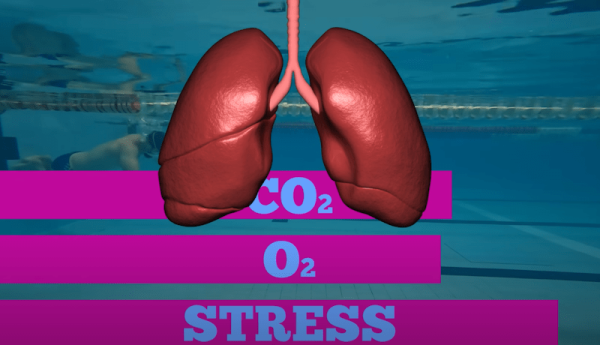
- Breathing too much will increase stress, reduce oxygen to your muscles and brain, and make it difficult to swim smoothly.
- Breathing too little also lowers oxygen levels and the CO2 buildup causes stress if you’re not used to it.
The 3 Fundamental Steps to Breathing Correctly
The first thing Aaron asked Dennise was if she had heart problems or if she was pregnant, when she answered no, he asked her to do bubbling. In this case, it means breathing through your nose at all times and exhaling slowly underwater.
This is not how you breathe while swimming smoothly, but it helps prepare the mind for a state of dynamic relaxation with increased blood flow. Now that Denise is calm, Aaron teaches her the 3 fundamental steps of breathing to swim smoothly.

Step 1: Keep a Minimum of 60% of Air in Your Lungs
Most of us never inhale or exhale near 100% of our lung capacity. Many of us don’t even have the strength to do so.
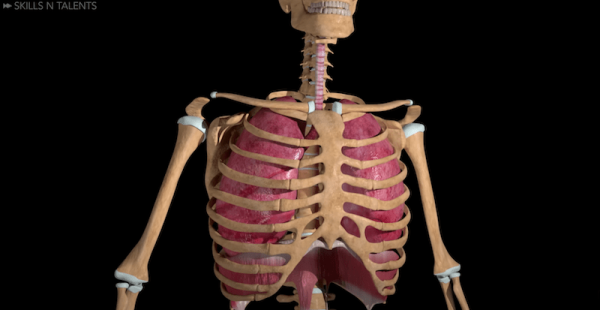
Breathing requires strength. It requires strength from the primary respiratory muscle, the diaphragm, and the auxiliary respiratory muscles, including the pectorals minor, and some core muscles, among others.
For swimming, it is ideal to be able to breathe at 100% of your capacity and to be able to do it quickly.

When you inhale, the diaphragm contracts and pushes down the organs in the abdominal cavity, this creates more space for the lungs. The pressure difference causes air to enter, when the lungs are full of air, it is easier to float and swim.

The contraction of the diaphragm also creates pressure in the abdominal cavity, this helps pump blood to the heart and creates a more stable trunk. This is very useful during exercise.
So inhale, and you will bring blood to the heart, you will have a stable trunk, and you will float better. This is why breathing fully and never exhaling too much during the swim is important.

Aaron tells Denise to practice contracting her diaphragm by pushing her stomach down and out in all directions. The chest must also expand to fill the lungs to 100% capacity. Here comes the difficult part; while keeping her core tight and breathing almost normally, she needs to do very light punches to her stomach for 1 minute.
This will force her to keep her diaphragm contracted and keep about 60% of the air in her lungs. She tries, but she hits herself too hard! She rests for a few minutes, then she tries again and succeeds.
Step 2: Exhale Quickly Before the Head Comes Out
Here comes a big debate among coaches and swimmers. Some of them believe that you should always exhale when your head is in the water, they say Olympic swimmers do that. I don’t like to teach that for two reasons: not all Olympic swimmers do that, and the swimmers do have almost perfect breath control while swimming, they can exhale about 3% of their breath.
Gary Hall says this gives them buoyancy and creates less friction with the water. But beginners don’t have that much control; they are likely to exhale too much, sink, and run out of breath.
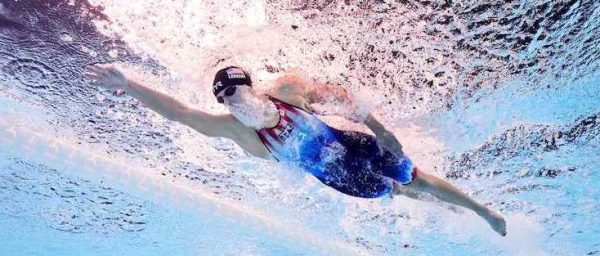
When you swim, you should exhale about 30% of your breath at a very specific moment. The rest of the time, I advise you to hold your breath.
The exhalation should be when the head is turning to breathe. It must be fast. You want to spend as little time as possible with your head out, if you spend too much time with your head out, your hips and legs will sink. So, the inhalation should be when the mouth and nose are just outside and ready to inhale.

You shouldn’t waste time exhaling when your face is out. To get used to doing this, you must jump off the bottom of the pool. Before the head comes out, you need to exhale quickly. practice that for 5 minutes.
Step 3: Inhale Quickly
The tricky part here is that the head must be close to the surface of the water. To do this, you need to rotate your body, too little rotation, and the neck will feel sore, too much rotation and the balance will be lost.

To practice, try breathing while holding on to the wall. Wait 1.5 to 4 seconds between each breath; this is like breathing every 2 to 5 strokes. Now that you know the rhythm and amount of breathing, it will be easier for you to try to swim smoothly with less effort.
Do you remember what I said at the beginning that I tried different breathing methods? In one method, I exhaled most of the air in my lungs and tried to swim, I felt like a beginner trying to lift my hips and legs. My underwater dolphin kicks just got a lot harder. I got tired immediately and couldn’t swim smoothly.

By the way, don’t forget to share this knowledge to others..
Thank you!