


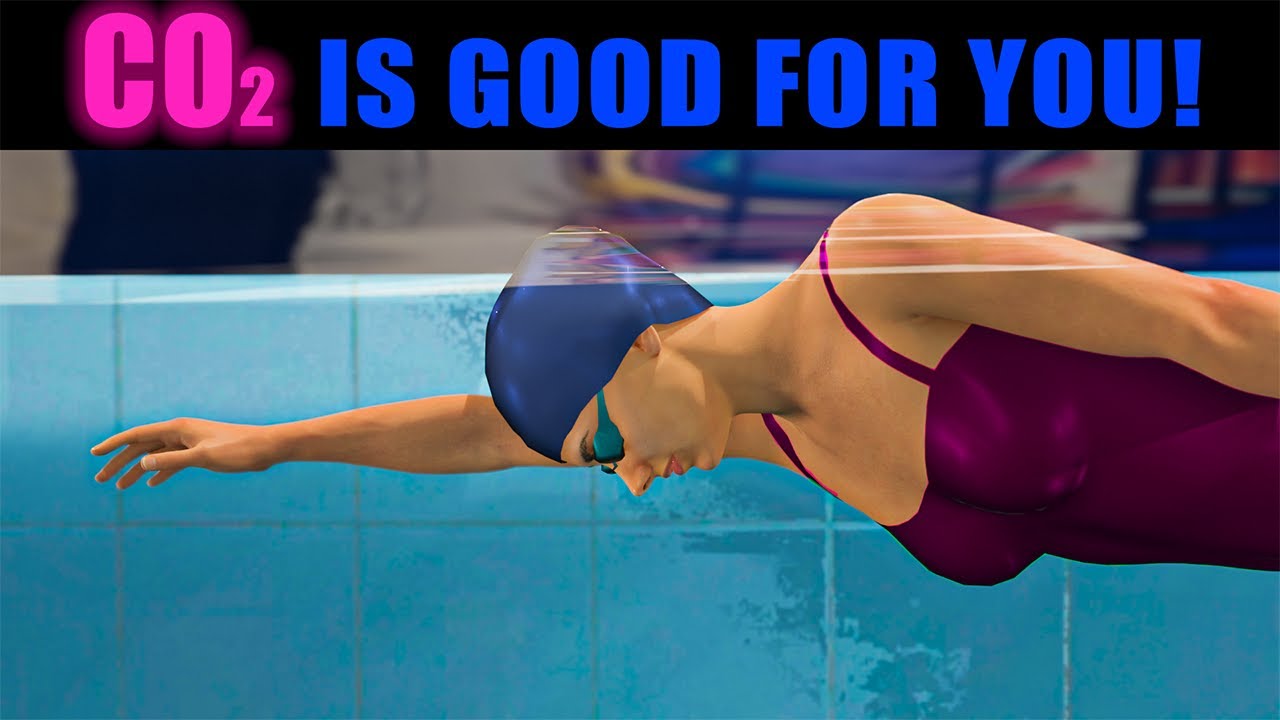
Inhale, exhale and hold your breath by pinching your nose. This is called BOLT score test. Stop whenever you feel the first desire to breathe or the first involuntary contraction of the diaphragm or the neck muscles. Your breathing should be normal after the breath hold, if it isn’t you went too far.
If you last less than 10 seconds you have a severe overreaction to carbon dioxide. This isn’t good. If you have a score higher than 25 seconds your breathing might be normal. A person with a bolt score of 40 seconds and above can swim calmly even if they don’t have a great swimming technique.

This shortness of breath occurs when the blood becomes more acidic. The body’s response to reduce acidity is to get rid of carbon dioxide by breathing more often and with more volume.
And I don’t need to tell you, this feeling is stressful. We can survive for weeks without food, days without water or sleep, but without breathing we can only survive for a few minutes. Our body knows that breathing is the number 1 priority.
Shortness of Breath When Breathing
It affects almost all functions of the body and mind. Our bodies think that swimming is a very high risk because we do not have access to immediate breathing. The feeling of wanting to breathe a lot is the way in which the body forces us to never lack oxygen.
The problem with hyperventilation is that while it increases the oxygen level in the blood, it decreases the oxygen levels in the muscles and brain. As we said, breathing a lot reduces carbon dioxide.

With too little carbon dioxide in the blood, blood vessels constrict and red blood cells retain oxygen instead of delivering it to the brain and muscles.
This discovery was called the Bohr effect. Here you will discover the three best exercises you can do to increase your CO2 tolerance. These were the hardest 25 meters of my life.
Improve your CO2 Tolerance
Unless you have excellent CO2 tolerance or you know the exercises, you will need a few months to complete this test.
E25 TEST is based on the teachings of Olympic athlete’s breathing coach, Patrick Mckeown. It consists of exhaling completely before starting the swim. Swim 25 meters without breathing, the challenge ends 10 seconds after touching the wall. Breathing through the nose is only allowed during those 10 seconds after the swim.
We will mention the security measures for the three exercises. But keep in mind that these exercises are not comfortable, especially in the first 2 weeks.
Respiratory Fitness
Respiratory fitness is important in helping you swim faster and with less effort. That’s why professional swimmers experiment with breathing techniques all the time; it’s part of their training.
A good example is Caeleb Dressel holding his breath in the last 10 to 15 meters before winning Olympic gold medals and breaking world records. Many of the winners do not seem breathless after they finish; they have developed a high tolerance for CO2 and also because their body is adapted to be more efficient at using oxygen.

Now, how dangerous is this? The body has three ways of preventing you from drowning.
- Warning High CO2: the chemoreceptors send out an alarm signal that makes you want to breathe.
- Spasms: It makes the breathing muscles spasm to force a breath.
- Unconscious Breathing: your body will continue to consume oxygen to the point of blackout so that it can start breathing unconsciously without you stopping it.
Shallow Water Blackout happens when you prevent those three solutions from happening. The worst and most dangerous thing you can do is hyperventilate before holding your breath underwater. You should never do this for two reasons;
- If you lower your carbon dioxide level, your brain won’t perceive the danger until it’s too late.
- Hyperventilation also reduces circulation and oxygenation to the brain.
This can cause you to lose consciousness without warning. Since you’re underwater, your body will automatically start inhaling water if you pass out.

Minimise Risks
Having no tolerance for CO2 makes exercise more difficult, increases the rate and volume of breathing, and increases the chances of chronic stress.
Not having tolerance to CO2 increases obesity, stress, and insomnia. Those three things kill far more modern humans than shallow water blackouts. But we don’t want shallow water blackouts, either.
To minimize risk, there are three golden rules for breath hold training underwater:
- People at risk should avoid strong breath holds, but can still practice very light holds and enjoy swimming and its many benefits.
- Never, never, never hyperventilate before holding your breath underwater.
- Permission of a certified lifeguard: we will never hold our breath beyond the body’s second warning, diaphragm, or neck spasms. In fact, after holding your breath, you should always be able to breathe comfortably through your nose.

Best Exercises
It is more important to gradually and steadily increase your CO2 tolerance than to push it too hard during these exercises.
EXERCISE 1
The first exercise is to build up the E25. Exhale and swim until you feel slight discomfort. Note that swimming without air is much more difficult than with full lungs. Stop when you feel the need to breathe. Try to breathe through your nose from the first inhalation.
To keep the water that drains from your face out of your nose, it is necessary to inhale very slowly. In my experience, I increased my tolerance by a meter each week, feeling calm after each attempt. Results will vary from person to person. The goal is to do the Exhaled 25.
EXERCISE 2
It is called nasal 25s. It consists of swimming 25 meters of fast freestyle at 80 to 90% of your maximum speed. Resting only 10 nasal breaths and start the next 25 fast. The exercise ends when you can no longer breathe through your nose when you slow down significantly or if you have to rest for more than 10 nasal breaths. While swimming, of course, you should breathe through your mouth.
This is probably the most difficult and important exercise.

But why is this exercise so important? Breathing through the nose reduces airflow by about 50%. Is not a bad thing. Nose breathing has four benefits:
- Nitric oxide – redistributes blood through the lungs, opens the airways, and sterilizes incoming air, which is a good thing, mainly found in the nose.
- Increases CO2 in the blood – allows the body to use the nitric oxide and carbon dioxide in the blood to expand the blood vessels. Resulting in a 10 to 20% higher oxygen consumption in the blood.
- Enough time to use oxygen – People are shocked when I tell them to hold their breath while swimming. It takes longer than you think to use all the oxygen in your lungs.
- Cleaner, warmer and more humid air. – Your nose will warm the air before it enters your lungs, and the air will be more humid.
Breathing through the mouth will dry out the airways, dehydrate the body faster, and is bad for dental hygiene. We are made to breathe through the nose. Probably the only reason we should breathe through our mouths is during swimming and extremely intense exercise.

Recommendations
Sleep and breathing experts recommended placing a small piece of tape over your mouth to prevent mouth breathing. The first time I used this I slept through the night without waking up and without a dry mouth! Breathing through your mouth at any time of the day affects your health and recovery.
After six months of doing the exercises, you will finally master the E25. Swimming can change your life, and you will be so happy with your progress.

Try this out! And let me know how this end!
Thank you!