


TRASH TALK Works In Swimming?

Does “Trash Talk” Work in Swimming?
Trashtalk might work in other sports. But if you trash talk in swimming, you are giving your opponents an advantage.
And there is a simple psychological reason for that: trash talk is a common psychological tactic used in various sports, serving to intimidate opponents, distract them from their plans, and psych oneself up.
The Results of Trash Talk
In 2015 Chad Le Clos saw Michael Phelps winning and said:
“Look, I don’t want to say it’s easy to swim by yourself, but it’s a lot harder when you know Chad Le Clos is coming back at you the last 50 meters. That’s what he’s got to think about really.”
A year later, even with a bad finish, Michael Phelps won the 200 fly and Chad got 4th.
In 2009 Cavic, who broke Phelps’ mark of 50.22, said:
“I’m capable of swimming under 50, which would be enough to win the gold.”
That same year Phelps won.
Ok, so trash talk doesn’t work with GOATs, you might think.
The same thing happened with Michael Jordan.
Horton had problems with Sun Yang and he said:
“I ignored him, I don’t have time or respect for drug cheats.”
That same year Horton didn’t want to get on the podium after Sun beat him.
It doesn’t even work when the media trash talks. On the Bleacher Report, we could find this comment: “James ‘The Missile’ Magnussen is not going to be beaten in the 100-meter freestyle. While the Americans have a loaded and dominant squad, they won’t be able to hang with Magnussen in his preferred event.” A few days later, this happened: Adrian (American) won.

Trash Talk VS Swimming
If you think about it, it makes sense that it works in other sports but not in swimming. Most of the trash talk in swimming comes during the relays, and there is a good psychological reason for that.
This works in sports where you have a game plan. But the best swimmers are the ones who know when to shut their intrusive thoughts off.
No game plan. Just instinct.
During the relays, trash talk is used to hype your teammates up, but when the rival finds out, it backfires.
The classic example is when Gary Hall Jr. said a long quote with a little bit of trash talk: “We are going to smash ’em like guitars…” But the guitars triumphed.

Are There Benefits?
When the French won the Men’s 4×100 Relay at the Olympics in 2012, the Americans trash-talked themselves after this race; “How could they lose against the French?”
That media trash talk probably helped them win 4 years later in 2016.
Then came Caleb Dressel, who found the best way to use trash talk as an advantage. He uses it towards his teammates, and then towards him. He said that while he enjoys engaging in trash talk during practice, he refrains from doing so during actual meets, preferring to “let (his) swimming do the talking.”
He also mentioned that trash talk keeps things light-hearted and can be a positive influence in training, helping to motivate and distract from the pressure of competition. He said: “Trash talk makes me better.” It must work because they won in 2020+1.
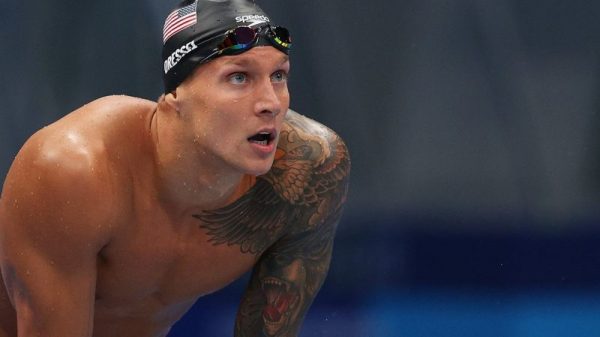
As Dressel said, trash talk among friends can benefit both.
But trash talk against rivals can benefit the rivals if they find out.
I think it also benefits the sport by creating drama and an increase in viewership. Trash talk is especially dangerous when it comes from your internal voice.
The Real Contradictions

Don’t trash talk too loudly if you don’t want to help your rivals. One tactic psychologists recommend for the self-trash talk is the “inner child work.”
There are different techniques to do this. One is journaling: Writing letters to or from the younger self, which can be a powerful way to understand and process emotions.
Try it! And don’t forget to enjoy the journey.

By the way, don’t forget to share this knowledge to others..
Thank you!